Home › Road, Street, and Municipal Paving
Partner with a reliable contractor for road paving in Boston, MA. We construct and resurface asphalt streets for municipalities, HOAs, and private developments, handling grading, base work, and traffic control. Our crews deliver smooth, durable roads that stand up to New England traffic and weather.
Precision Asphalt Boston provides professional road paving throughout Boston, MA, Massachusetts and the surrounding area. Our licensed, insured crew delivers safe, clean, on-time work with a free estimate before anything begins. Call (617) 648-5798 or request your free quote.
Road, Street, and Municipal Paving in Boston, MA
Road paving in Boston is not a one-size-fits-all job. Between freeze-thaw cycles, heavy traffic, and tight city streets, every project needs a tailored approach. Precision Asphalt Boston focuses specifically on how asphalt pavements behave in our New England climate, then designs each road, street, or municipal surface accordingly.
For local agencies, property managers, and contractors, the goal is simple but demanding: a road that drains correctly, resists rutting from buses and delivery trucks, and survives years of winter plowing. That requires more than just laying blacktop. Our crews evaluate sub-base strength, existing utilities, traffic loading, and drainage patterns before any paving starts. This up-front analysis is where many projects go wrong if it is skipped or rushed.
Whether we are rebuilding a municipal street, resurfacing a neighborhood road, or constructing access roads for facilities, Precision Asphalt Boston delivers road paving that is engineered for Boston traffic and weather, not just for the first inspection.
Assessment, Core Sampling, and Project Planning
A successful road or municipal paving project in Boston starts with understanding the existing pavement and base. Precision Asphalt Boston often recommends core sampling and test pits on older streets. By cutting and extracting asphalt cores, we can see total thickness, how many overlay layers exist, and the condition of the base material. This tells us whether mill and overlay is appropriate or whether full-depth reconstruction is necessary.
We also check for common local issues such as shallow utilities, buried cast iron structures, and mixed fill materials that are common in older Boston neighborhoods. Groundwater level and existing drainage structures are documented so we can design proper slopes and crossfall to get water off the surface and away from the road foundation.
From there, we develop a project plan that sequences traffic control, milling, base repair, paving, and utility coordination. On municipal and institutional work, we often phase the job to keep at least one lane open or maintain emergency access. We coordinate with DPW, water and sewer, and utility companies when castings, manholes, or valve boxes must be raised or rebuilt. This preconstruction planning step keeps road closures shorter and avoids rework after paving is complete.
Subgrade Preparation, Drainage, and Base Construction
Boston roads live or die based on what is under the asphalt. The subgrade and gravel base are the most important elements of any road paving job performed by Precision Asphalt Boston.
We start by excavating to the design depth, removing unsuitable materials such as organic soil, soft clay spots, and construction debris. If we encounter poor native soils, we may undercut and replace them with a compactable gravel borrow or use a stabilization method that fits the municipality’s standards. This step is crucial in areas near the harbor or older filled land where subsoils can be unpredictable.
Next, we install and fine grade the aggregate base, commonly a dense-graded crushed stone that meets Massachusetts specifications. Using vibratory rollers, we compact in lifts to meet target density so the base will not settle under traffic. At the same time, we shape the road crown or cross slope, typically 1.5 to 2 percent, to shed water to the gutters or shoulders.
Drainage improvements are integrated at this stage. We may install or reset catch basins, underdrains, or edge drains to move water out of the base layer. In Boston’s freeze-thaw climate, water trapped in the base is a major cause of potholes and alligator cracking, so we prioritize drainage in every design, even on smaller side streets and access roads.
Asphalt Mix Design and Layering for New England Conditions
Not all asphalt is the same. For road paving in Boston, Precision Asphalt Boston uses mixes specified for Massachusetts and adjusted for expected traffic and temperature swings. We work with reputable asphalt plants to select the right PG binder grade and aggregate structure for each project.
Typically, a municipal or high-use road is built with more than one lift of asphalt. The lower lift, often called the binder course, is a thicker, coarser mix that provides structural strength. The top lift, or surface course, is a finer mix that provides ride quality and skid resistance. Lift thickness and total asphalt depth are matched to the traffic category, so a lightly traveled side street is not overbuilt and a bus route is not underbuilt.
We also consider specialized needs, such as intersections that experience turning stresses from buses and trucks, or grades that frequently see braking and acceleration. In these areas, we may recommend a modified binder, thicker section, or alternative mix design to limit rutting and shoving. For municipal clients, we stay within MassDOT or city standards while still tailoring the pavement structure to real-world use.
Paving Operations, Compaction, and Quality Control
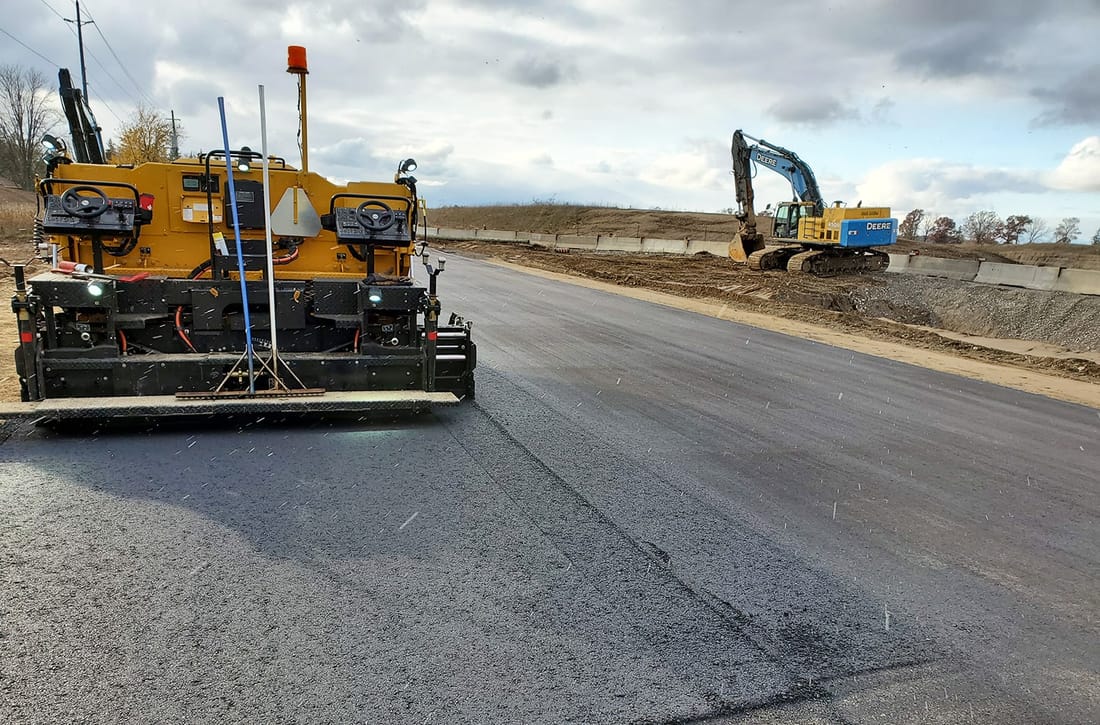
How asphalt is placed is just as critical as which mix is used. Precision Asphalt Boston uses calibrated pavers and steel and rubber-tired rollers to achieve smooth, dense pavements that stand up to Boston traffic and winters.
We schedule paving to avoid extreme temperatures. In cooler months, we monitor haul distances and laydown temperatures so the asphalt does not cool before it can be compacted. During summer, we plan around peak heat to reduce mat tearing or scuffing from traffic opening too soon.
Our crews set automated grade and slope controls on pavers where feasible, especially on longer stretches of road or municipal projects where smoothness matters. We pay close attention to joint construction, including longitudinal joints between passes and transverse joints where paving ends and begins again. Proper overlap, temperature control, and rolling sequence prevent cold joints that later unravel or leak water.
Density testing and inspection are part of our standard quality control. We perform or coordinate field compaction tests to verify that each lift meets required density. On municipal work, we welcome third-party testing and inspection, because it confirms that the pavement structure was built as specified and provides documentation for future asset management.
Resurfacing, Mill and Overlay, and Repairs on Existing Roads
Not every Boston street needs full reconstruction. Many roads and municipal surfaces can be preserved or extended through mill and overlay or targeted repairs. Precision Asphalt Boston helps clients choose the right approach based on the existing pavement condition and long-term plans.
For streets with widespread surface cracking, raveling, or shallow rutting but a sound base, we typically recommend milling a set depth, often 1.5 to 2 inches, to remove the worn layer and restore profile. We then repair localized base failures, adjust castings, and place one or more new asphalt lifts. This method restores ride quality and waterproofs the existing structure at a lower cost than full-depth reconstruction.
If a road shows structural failures such as deep alligator cracking, frost heave, and repeated potholes in the same areas, we isolate those sections, perform full-depth reclamation or patching, and then overlay. This targeted approach is common on municipal budgets where the goal is to maximize lane miles improved each season.
For smaller municipal lots, alleys, or access roads, we may combine crack sealing, patching, and thin overlays to stretch pavement life until a larger capital project can be funded. We align repair strategies with your pavement management priorities, not just with a one-time paving project.
Project Timing, Traffic Management, and Cost Drivers
Boston’s construction season and traffic patterns directly affect how road paving projects are scheduled and priced. Precision Asphalt Boston typically plans municipal and roadway work from late spring through early fall when temperatures allow proper asphalt compaction and when freeze-thaw risk is lower.
Traffic management is a major cost and planning factor. Work on busy streets often requires police details, signage, cones and barrels, detour routes, and coordination with MBTA bus lines or bike lanes. Night work can reduce congestion but may involve premiums for labor, lighting, and noise control. We help municipalities and owners compare these options honestly so they understand where their paving budget is going.
Key cost drivers include depth of excavation, base replacement, asphalt thickness, complexity of drainage improvements, number of castings and manholes to adjust, and access constraints. Tight urban areas, historic districts, and locations with significant on-street parking usually require more labor and traffic control.
Before any contract is signed, Precision Asphalt Boston provides a clear breakdown of scope, staging, and expected disruptions. We discuss how long each phase will last, how residents or facility users will be notified, and what temporary surfaces will be in place during construction. For municipal clients, we can assist with public communication materials that explain the road paving process and schedule in plain language for residents.