Home › Asphalt Sealcoating & Crack Filling
Protect your driveway investment with asphalt sealcoating in Boston, MA. Our team cleans, fills cracks, and applies a deep black sealer that shields your pavement from water, salt, and UV damage. Regular crack filling and sealcoating keep your asphalt looking fresh and help prevent costly repairs later.
Precision Asphalt Boston provides professional asphalt sealcoating throughout Boston, MA, Massachusetts and the surrounding area. Our licensed, insured crew delivers safe, clean, on-time work with a free estimate before anything begins. Call (617) 648-5798 or request your free quote.
Practical Asphalt Protection for Boston Properties
Asphalt in Boston takes a beating. Freeze-thaw cycles, road salt, plow blades, and summer heat all work against your driveway or parking lot. Sealcoating and crack filling are the two most effective ways to slow that damage and avoid full replacement years earlier than necessary.
Precision Asphalt Boston focuses on straightforward, results-first work. We evaluate how your surface is actually used, from light residential driveways in Dorchester to heavily trafficked commercial lots in South Boston, then match the sealer type, number of coats, and crack repair method to that use. The goal is not just a black surface. It is a tighter, more weather-resistant pavement that holds up to New England conditions.
For most local properties, sealcoating is recommended every 3 to 4 years, sometimes more often for busy commercial lots or loading areas. Crack filling is done as needed, typically every season or two, before water has a chance to get in and lift the asphalt during winter. Done on the right schedule and with the right materials, these services can extend pavement life by many years and keep the surface safer for cars and pedestrians.
How Our Asphalt Sealcoating Process Works
Good sealcoating is about surface preparation as much as the sealer itself. Precision Asphalt Boston follows a step-by-step process so the coating bonds properly and wears evenly.
1) Inspection and planning: We walk the site, flag drainage issues, oil-saturated areas, potholes, and structural failures. If your asphalt is crumbling or flexing under traffic, we discuss repairs or patching before sealcoating. Sealer alone will not fix structural problems.
2) Cleaning and edge work: We power blow and sweep the entire area, then wire-brush or power scrub all cracks and joints. Dirt, sand, and loose aggregate are removed so the sealer can contact solid pavement. Edges along grass, curbing, and walkways are trimmed and cleaned so the finished line is straight and consistent.
3) Oil and stain treatment: In many Boston driveways and commercial lots, there are oil drips and leaking vehicle spots. These are primed with an oil spot primer or cut out and patched if they are severe. Skipping this step is one of the main reasons cheap sealcoats peel.
4) Detail work and crack filling: Major cracks are filled first (more on that in the next section), and tight areas around garage doors, walkways, and masonry are brushed in by hand to control thickness and protect adjacent surfaces.
5) Sealer application: For most residential jobs, we use a coal tar or asphalt emulsion sealer (depending on local VOC rules and property use) applied by spray, brush, or a combination. On commercial lots we often spray large open areas and brush or squeegee at transitions and high-wear points. We adjust solids content and number of coats based on traffic level instead of applying a one-strength-fits-all mix.
6) Curing and reopening: Typical cure time in the Boston area is 24 to 48 hours in warm, dry weather. In cooler or damp conditions, we may recommend 48 to 72 hours before vehicle traffic. We rope or cone off entrances, place clear signage when needed, and give you written instructions so tenants or family members know exactly when the area can be used again.
Crack Filling That Handles New England Winters
Cracks are the entry points for water and road salt. Once moisture gets into the base and freezes, pieces of asphalt start popping out. Precision Asphalt Boston focuses heavily on crack treatment so the surface holds together through repeated Boston winters.
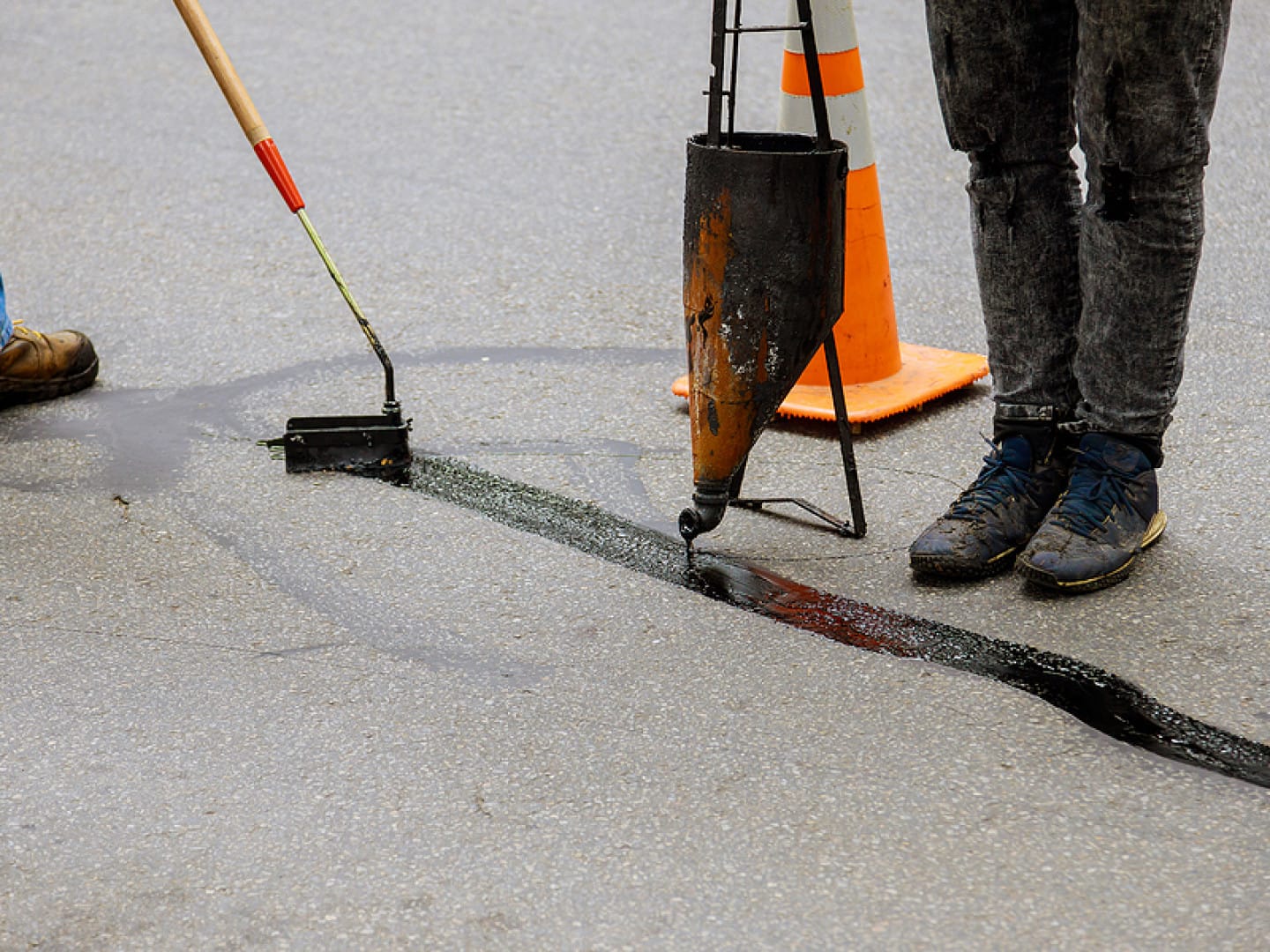
We divide cracks into categories. Hairline surface cracks are usually sealed by the sealcoat itself. For cracks wider than roughly 1/4 inch, we perform dedicated crack filling using hot-applied rubberized crack sealant on larger lots and high-performance cold-applied materials on smaller residential projects or where open flame is not practical.
Preparation is critical. We clean each crack with high-pressure air and mechanical wire brushing, and in some cases routing (widening and shaping) on larger commercial jobs. This removes vegetation, dust, and loose edges so the sealant can bond to clean sidewalls. Moisture is checked and, if necessary, we postpone or temporarily dry the crack so we are not trapping water inside.
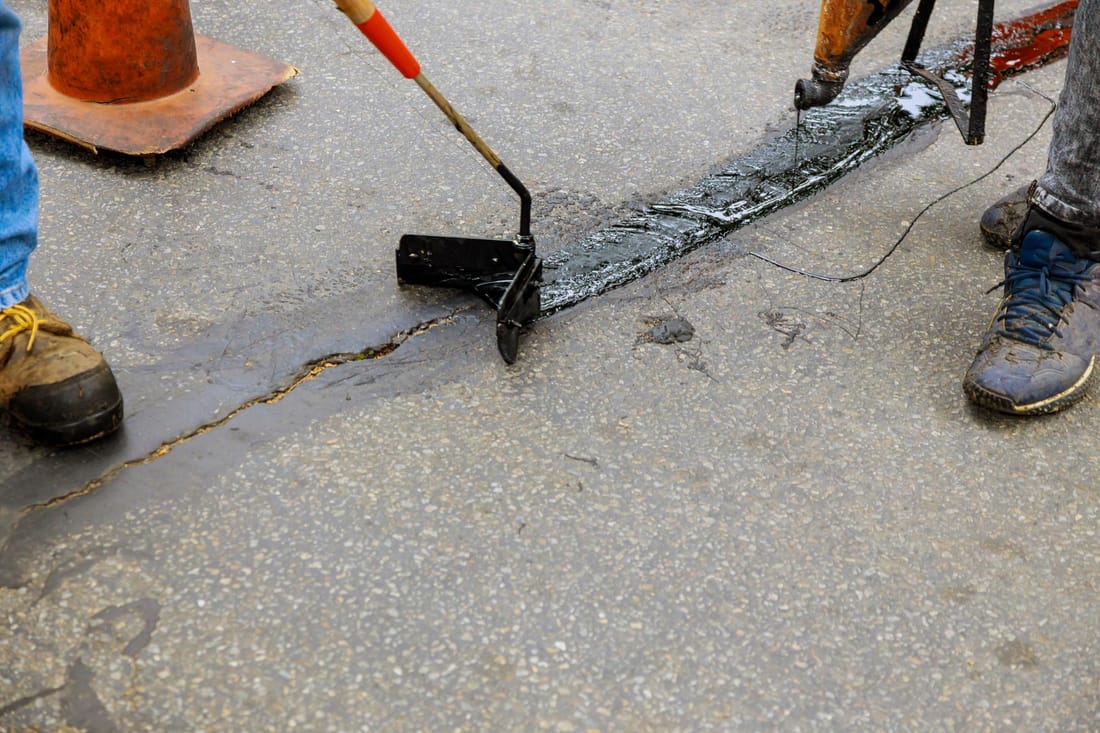
For hot pour crack sealing, the material is heated to the manufacturer-specified temperature, not guessed. Overheating burns the rubber and shortens life, underheating leads to poor adhesion. The sealant is then applied slightly overfilled and leveled with a squeegee to form a smooth band that vehicles can drive over without catching tires.
For residential driveways and small lots, we often use a high-quality cold-pour crack filler that remains flexible. This is ideal for localized work and avoids heavy equipment in tight neighborhoods. We explain which cracks are cosmetic and which are structural so you understand where your money is actually needed.
The combination of crack filling and sealcoating is much more effective than sealcoating alone. Crack filler blocks the deeper water pathways, and the sealcoat protects the smaller surface openings, reducing the overall rate of deterioration.
What Affects Cost for Sealcoating and Crack Filling
Two driveways of the same size in Boston can have very different prices for sealcoating and crack filling. Precision Asphalt Boston prices based on actual field conditions, not just square footage.
Key cost factors include:
• Pavement condition: A fairly smooth, intact surface needs less prep, fewer repairs, and sometimes a lighter crack filling scope. Severely oxidized, alligator-cracked, or broken pavement may require patching, more cleaning time, and heavier material use. We will tell you if an area is too far gone for sealcoating to be a smart investment.
• Crack density and width: A lot with one or two long cracks is much cheaper to treat than a surface with hundreds of interconnected cracks. Wide cracks take more material and more labor for routing and shaping.
• Number of coats and traffic level: A quiet residential driveway may only need one full coat, sometimes with a second pass in high-wear turning areas. A retail or apartment lot with frequent turning, delivery trucks, and snowplow activity almost always needs two coats plus targeted reinforcement at entrances and loading zones.
• Layout and access: Tight urban spaces, steep driveways in neighborhoods like Jamaica Plain, or lots with many islands and corners are slower to seal, which impacts labor time. Limited access for equipment or the need to phase work so a business can stay open can also affect cost.
You will receive a written proposal that separates sealcoating from crack filling, notes any recommended repairs, and spells out how many coats and what materials we plan to use. That way you can compare options based on something more meaningful than a single price number.
Best Timing and Local Considerations in Boston, MA
Asphalt maintenance is heavily seasonal in Massachusetts. Precision Asphalt Boston schedules sealcoating and crack filling work to match local weather patterns so the materials cure correctly and last.
Ideal timing for full sealcoating is typically late April through early October. We look for daytime temperatures consistently above 50 degrees, overnight temps that stay above 45 degrees, and no rain in the immediate forecast. Early spring and late fall can be tricky near the water or in shaded areas, so we may adjust start times or split the work to avoid cold spots.
Humidity and shade matter. In parts of Boston where tall buildings keep lots shaded for much of the day, we account for slower drying times. On north-facing driveways, we may start work later in the morning to let any dew burn off. After heavy rain, we wait until the surface and cracks are completely dry, even if that means a short delay.
For commercial properties, many of our local clients choose weekend or night work during the milder months. This limits disruption to customers and allows us to section off areas so the rest of the lot remains usable. Boston zoning and building rules may restrict work hours in some neighborhoods, so we plan around local ordinances and noise rules.
Crack filling has a slightly longer workable season because smaller work areas can often be shielded or dried more easily, but we still follow manufacturer guidelines on minimum temperatures. Trying to save a week by working in poor conditions often results in sealant failure, so we would rather schedule it correctly once.
What You Should Know Before Hiring an Asphalt Sealcoating Contractor
The quality of sealcoating and crack filling varies widely. Before you hire anyone in Boston, there are a few things worth asking and checking.
1) Material specifics: Ask what type of sealer they use (coal tar, asphalt emulsion, or a blend), whether it is commercial-grade, and if they dilute it. Precision Asphalt Boston follows manufacturer specs for mix ratios and explains why a particular sealer fits your property. Extremely cheap prices often mean overly thinned material that wears off quickly.
2) Prep work included: A quote that sounds low but does not include power cleaning, edge prep, oil spot treatment, or crack filling is not a fair comparison. We list each prep step in our proposal so you can see exactly what is included.
3) Insurance and references: For commercial jobs in particular, ensure the contractor carries proper liability and workers compensation coverage. Ask for recent local addresses of work you can drive by. Fresh jobs from past seasons in Massachusetts can show you how well the sealer aged through at least one winter.
4) Traffic control and communication: A professional crew should provide clear instructions on closing and reopening the surface, how deliveries will be handled, and where residents or customers should park. We coordinate with property managers, HOAs, and business owners so no one is surprised the day of the job.
5) Realistic expectations: Sealcoating and crack filling are maintenance, not magic. They cannot rebuild a failed base or fix major drainage problems. We are upfront when replacement or larger repairs are the smarter use of your budget. If a contractor promises to make severely broken asphalt look and perform like new with just sealer, be cautious.
With the right information and a clear, detailed proposal, you can choose a contractor who protects your asphalt investment instead of merely darkening the surface for a season.