Home › Parking Lot Sealcoating & Maintenance
Protect your investment with routine parking lot sealcoating in Boston, MA. We clean, crack seal, and apply commercial grade sealer that shields asphalt from weather, oils, and traffic wear. Our maintenance plans keep your lot looking fresh, improve curb appeal, and help avoid premature pavement failure.
Precision Asphalt Boston provides professional parking lot sealcoating throughout Boston, MA, Massachusetts and the surrounding area. Our licensed, insured crew delivers safe, clean, on-time work with a free estimate before anything begins. Call (617) 648-5798 or request your free quote.
Parking lot sealcoating in Boston that is planned around real New England conditions
Parking lot sealcoating in Boston is not a once-and-done chore, it is scheduled and applied around our weather. At Precision Asphalt Boston, we plan parking lot sealcoating projects around the local freeze-thaw cycle, salt use, and coastal moisture. That usually means main sealcoating work from late April through October, when daytime highs are at least in the low 50s and the surface can dry properly.
Before we ever open a bucket of sealer, we look at how your specific lot is used. A retail plaza with constant car movement needs different timing and traffic control than a small office lot that is empty on weekends. We also consider shade from nearby buildings, drainage patterns after rain, and where snow is usually piled in winter. All of this affects how long the sealer takes to cure and where we focus extra prep. Our goal is to set clear expectations up front about how many phases the work will take, how long areas will be blocked off, and what you can realistically expect in terms of appearance and lifespan from one sealcoating cycle in Boston’s climate.
For many properties, we recommend sealcoating every 2 to 4 years, depending on traffic, previous maintenance, and how aggressively snow plows are used. We walk the pavement with you, point out areas that are only oxidized versus areas that are already raveling or alligatored, and then give a plan that fits your budget instead of a generic schedule.
Step-by-step: how we prep and seal your parking lot
Good sealcoating is 70 percent preparation and 30 percent material. Precision Asphalt Boston follows a step-by-step process that is practical for Boston properties and our weather.
1. Inspection and layout: We start with a site inspection, mark drainage structures, utility covers, and bad spots that need patching. We also map how to phase the work so some parking is always available when possible.
2. Cleaning and vegetation control: We use power blowers, brooms, and often mechanical sweepers to remove sand, salt residue, leaves, and loose asphalt. Oil spots are pre-treated with a degreaser and sometimes torched lightly so the sealer can bond. Grass that has grown into cracks or edges is cut back and removed. In Boston, winter sanding and salt leave very fine dust on the surface, and if this is not removed the sealer peels, so we spend real time on this step.
3. Crack sealing: Linear cracks are cleaned with compressed air and wire brushes. For working cracks, we apply hot rubberized crack filler using a melter applicator. This keeps water out of the base during winter freezes and prevents cracks from spreading. We do this before sealcoating so the sealer covers the edges and improves appearance.
4. Patching and localized repairs: Areas that are alligatored, potholes, or spots where water pools are either cut out and replaced with new hot mix asphalt or treated with skin patching or infrared repair, depending on severity. Sealcoating is not a structural fix, so we make sure weak areas are corrected first.
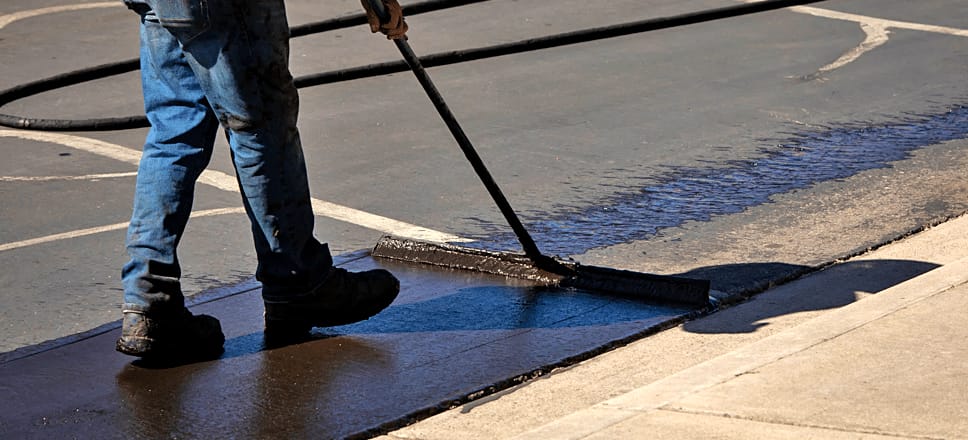
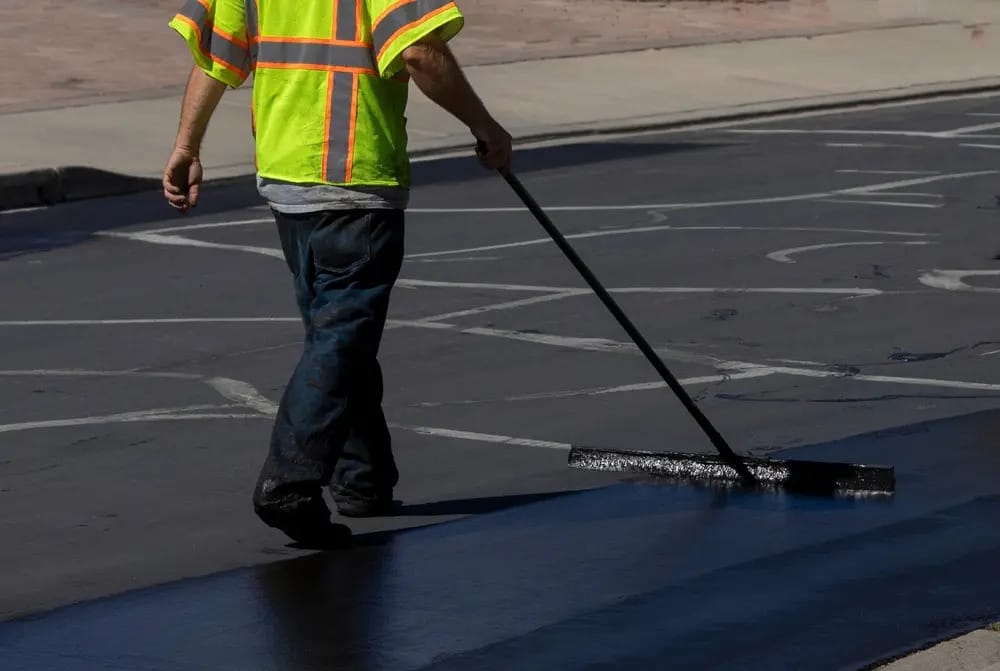
5. Sealcoat application: Once the surface is fully dry, we apply a commercial-grade refined coal tar or asphalt emulsion sealer (depending on your preference and local regulations) using a combination of spray and squeegee methods. Squeegees work the material into the surface, while sprayers give a uniform top coat. High-traffic drive lanes usually receive two coats, while light-use areas may only need one.
6. Curing and re-striping: After the sealer has cured, typically 24 to 36 hours depending on humidity and temperature, we measure and layout new parking lines, arrows, stop bars, and ADA markings using fast-dry traffic paint. We time this so your lot can reopen quickly but without tire marks or tracking.
Material choices and what really affects cost
Not all commercial parking lot sealers are the same, and not every lot in Boston needs the most expensive product. Precision Asphalt Boston explains the options so you can choose what fits your property.
We typically use two main categories of sealer: refined coal tar sealer and asphalt emulsion sealer. Coal tar sealer usually lasts longer and is more resistant to gasoline and oil drips, which is helpful for gas stations, busy retail, and lots with heavy truck traffic. Asphalt emulsion has less odor, is friendlier to surrounding landscaping, and is often preferred for schools, residential associations, and properties with strict environmental expectations.
Additives are another factor. We may recommend sand and latex additives, which provide better skid resistance and a richer black color, and help the sealer stand up to plow blades. In Boston, where snow plows scrape hard every winter, this extra toughness often pays for itself in added life between sealcoating cycles.
Cost is driven mainly by four things: square footage, condition of the pavement, amount of crack sealing and patching required, and how complicated the phasing and traffic control will be. A simple, open lot in decent condition will cost less per square foot than a chopped-up layout with islands, heavy oil contamination, and many cracks. We also look at whether the work must be done off-hours or overnight to avoid interfering with tenants. We spell out these factors in a written proposal so you understand where each dollar is going.
We do not quote a simple per-square-foot price over the phone for parking lot sealcoating because that usually penalizes either you or us. Instead, we measure the property, inspect conditions, and then give a price that matches the actual effort needed.
Common parking lot problems we solve before they get expensive
In Boston and across Massachusetts, parking lots face a specific list of problems: salt damage, freeze-thaw cracking, plow scarring, and drainage issues from sudden heavy rain. Precision Asphalt Boston structures maintenance so these issues are caught and handled early.
Fine surface cracking and graying (oxidation) are usually the first signs your asphalt is drying out. Left alone, they let water into the base and lead to alligator cracking and potholes. A sealcoating cycle combined with proper crack sealing slows that down significantly. For newer lots, this is typically all that is needed.
For older lots, we often see depressions near catch basins and at the end of drive lanes where vehicles stop and turn repeatedly. We correct these with localized full-depth patching or infrared repair, then sealcoat over the entire area to blend color. If drainage is poor and water is standing in multiple places, we may recommend minor grading adjustments or additional catch basins before sealcoating. Sealcoating over standing water issues only hides the problem for a season.
Snow plow damage shows up as gouges, scraped-off sealer, and broken edges near curb lines. We edge-patch these areas, seal cracks that have opened at the perimeter, and sometimes recommend curbing repair if the asphalt has pulled away. To reduce recurring damage, we can meet with your plow contractor and mark sensitive edges and raised structures so they know where to be cautious.
Oil spots from delivery trucks and idling vehicles are another concern. Sealer does not adhere well to untreated oil. We either cut out severely soaked areas or use oil-spot primers that are designed for this specific problem. During your maintenance walk-through, we point these areas out and explain the best remedy, along with what you can do going forward, such as placing drip pans in problem spots.
How to schedule and what Boston property owners should expect
Sealcoating and maintenance are most successful when they are planned a few weeks ahead, especially in Boston where weather windows can close quickly. Precision Asphalt Boston usually books parking lot sealcoating projects 2 to 6 weeks in advance during peak season. For large retail or multifamily properties, we coordinate with you to notify tenants, post signs, and phase the lot so sections remain open if needed.
Before work starts, we ask property managers to confirm two simple things: vehicles are moved off the lot or out of the work sections, and irrigation systems are shut off so sprinklers do not hit the surface while it is curing. Trash pickup, deliveries, and any scheduled events should be discussed so we can plan work around them.
During the project, expect some noise from blowers, sweepers, and crack sealing equipment. We typically start work after morning rush and finish in time for evening activities, or we can schedule overnight if your property demands it. Once the sealer is down, we block access with tape and barrels. Foot traffic can usually resume sooner than vehicle traffic, but we will give exact times based on the conditions that day.
A fresh sealcoat will look uniformly black for the first few weeks, then will mellow slightly in tone. Light tire scuffs on turning areas are normal during the first days and do not indicate failure. In winter, we recommend using rubber-edged plow blades when possible and avoiding straight steel scraping down to bare pavement.
We leave you with a simple maintenance plan: how often to sweep, what de-icing materials to favor, and when to call us for a quick inspection. Many of our Boston clients schedule an annual fall or spring walk-through so we can spot potential issues long before a full replacement is needed.