Home › Commercial Asphalt Resurfacing & Overlays
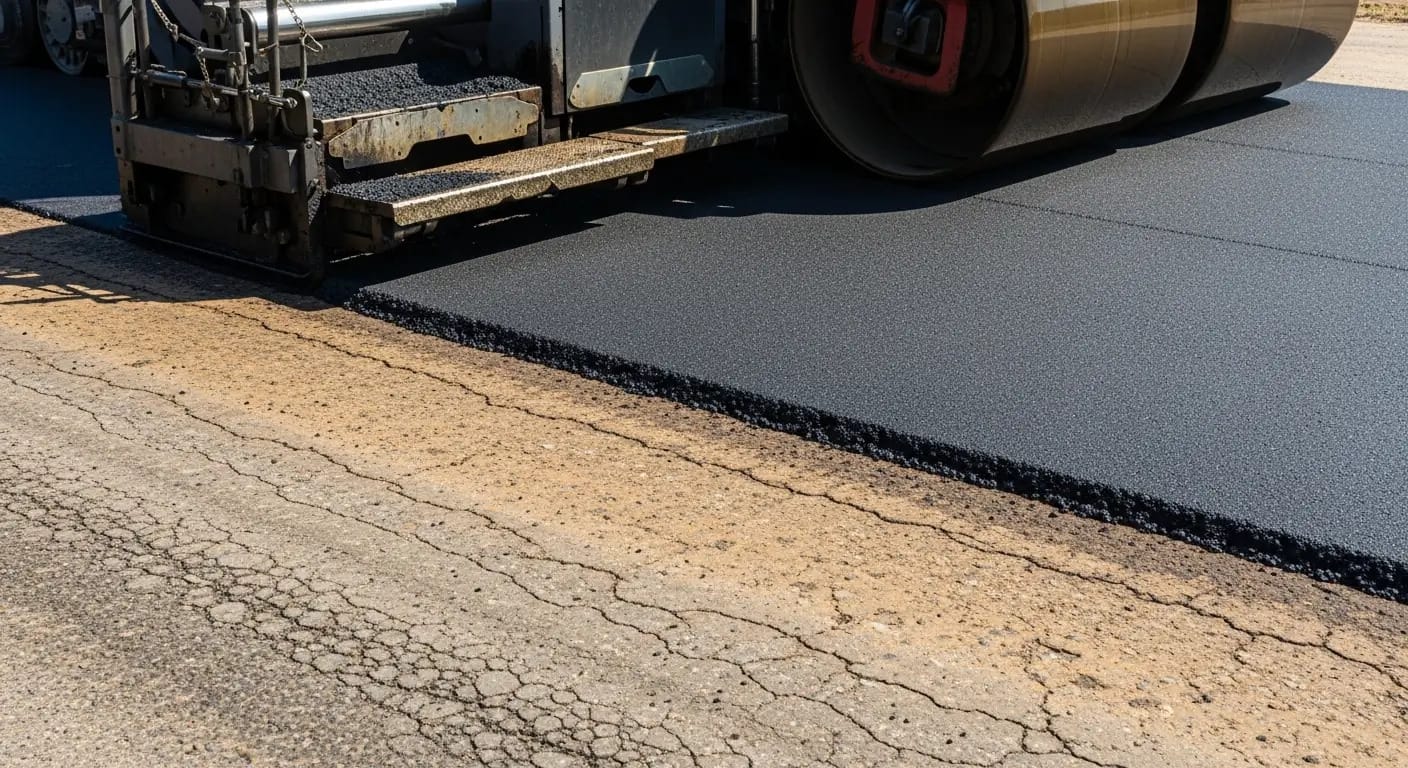
Extend the life of your existing pavement with commercial asphalt resurfacing in Boston, MA. We install overlays on sound bases to correct surface wear and minor defects in parking lots and drive lanes. Our team can also mill high spots and perform mill and overlay projects to restore smooth, even grades around your property.
Precision Asphalt Boston provides professional commercial asphalt resurfacing throughout Boston, MA, Massachusetts and the surrounding area. Our licensed, insured crew delivers safe, clean, on-time work with a free estimate before anything begins. Call (617) 648-5798 or request your free quote.
Commercial Asphalt Resurfacing & Overlays for Boston Properties
If your commercial parking lot or access road is cracked, faded, or starting to ravel, resurfacing and overlays can bring it back without the cost of a full tear out. Precision Asphalt Boston specializes in commercial asphalt resurfacing for Boston, MA businesses, from small retail plazas in Dorchester to multi level garage tops in the Seaport.
Resurfacing is the process of installing a new layer of hot mix asphalt over a structurally sound, but worn, pavement. It is ideal when your asphalt has surface problems like alligator cracking, shallow potholes, drainage issues, or rutting, but the base underneath is still solid. For many Boston commercial properties, especially those built in the 1970s to 1990s with older asphalt lots, resurfacing stretches the life of the pavement by 8 to 15 years at a fraction of full reconstruction cost.
We understand the specific demands of Boston traffic and weather. Freeze thaw cycles off the Charles, plow damage in winter, sand and deicing chemicals, and tight urban lot layouts all influence how we design and install a resurfacing or overlay. Our team plans the work around your business hours, foot traffic patterns, and delivery schedules so tenants, customers, and employees can still access your property safely.
How Commercial Asphalt Resurfacing Is Actually Done
A quality overlay project is more than just spreading new asphalt on top. Precision Asphalt Boston follows a step by step process so the new surface bonds properly and drains correctly.
1. Evaluation and core sampling: We start with a site walk and, on larger or heavily distressed lots, will recommend test cores. These small drilled samples show us asphalt thickness, base condition, and whether there are hidden issues like saturated subbase or prior asphalt patches. In Boston, older mill buildings converted to offices often have multiple generations of pavement stacked on top of each other. Core sampling prevents us from overlaying over buried problems.
2. Repairs and milling: Before a true overlay, we cut out and repair localized failures. Deep potholes, heaved areas from tree roots, or spots where utility trenches have settled get saw cut, excavated, and rebuilt with new base and binder. Where elevations are critical, such as at garage entrances, loading docks, or ADA ramps, we use milling machines to grind down the existing asphalt to a controlled depth. This lets us add new material without creating trip edges or flooding at door thresholds.
3. Leveling course and profile correction: Many Boston lots have settled over time, especially around catch basins and in heavy truck lanes. We use a leveling course, a thin intermediate layer of asphalt, to correct slopes and remove birdbaths. Lasers and long straightedges help us ensure water flows to drains rather than freezing in random low spots in February.
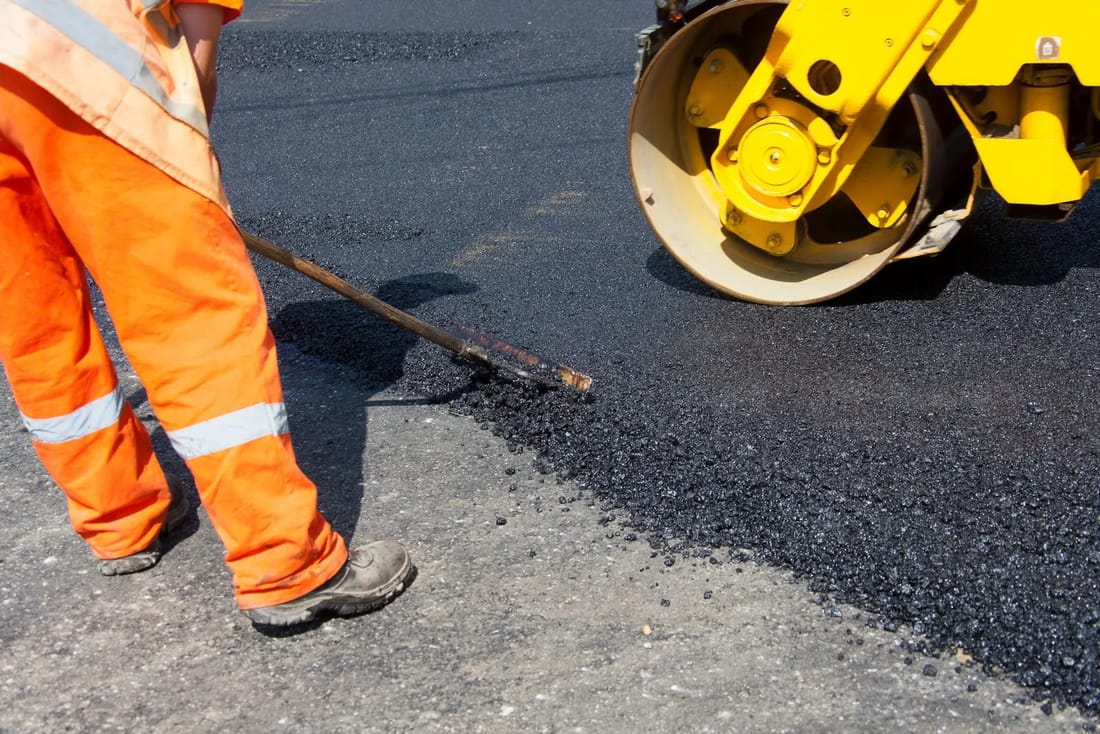
4. Tack coat and overlay installation: A tack coat (a sprayed asphalt emulsion) is applied to create a bond between old and new surfaces. Then we place hot mix asphalt using pavers for consistent thickness, usually between 1.5 and 2.5 inches for commercial lots, and thicker in drive lanes that receive delivery trucks. The mix design is chosen for Boston conditions, typically a dense graded mix with enough stone to resist rutting from stop and go traffic.
5. Compaction and finishing details: Steel drum and pneumatic rollers compact the overlay to target density, which is key to long life. We hand finish around curbs, manholes, utility valve boxes, and drain inlets so there are no abrupt edges. After the mat cools, we reinstall or adjust castings to finish elevation, then schedule line striping and pavement markings.
Material Options, Surface Design, and Striping Layouts
Commercial asphalt resurfacing is also an opportunity to improve how your property functions. Precision Asphalt Boston helps property managers and owners in Boston tailor material choices and striping layouts to their specific uses.
For material, we typically recommend:
• Standard dense graded surface mixes for general parking fields, which give a smooth, quiet ride and good durability.
• Heavier duty mixes with higher stone content for dumpster pads, loading zones, and drive lanes where box trucks, delivery vans, or semis frequently turn or sit idling.
• Polymer modified mixes or finer graded surfaces for high visibility areas near office main entrances or retail storefronts where appearance and scuff resistance matter.
Drainage and grade design are especially important in Boston, where older lots sometimes slope back toward buildings or neighbor properties. When resurfacing, we can subtly re profile areas to move standing water away from foundations and walkways. Around catch basins, we may install concrete collars along with the overlay so basins do not settle again and create new potholes.
Striping and layout are part of the resurfacing conversation too. This is often the best time to adjust parking counts, add or relocate ADA accessible spaces to meet current Massachusetts regulations, or improve traffic flow. For example, we can convert a cramped two way drive aisle to a one way loop, widen fire lanes to satisfy Boston Fire Department access requirements, or add crosswalks and stop bars to protect pedestrians coming out of ground floor retail spaces.
What Drives Cost for Commercial Asphalt Resurfacing in Boston
Property owners often ask why resurfacing quotes vary so much. Precision Asphalt Boston is upfront about the cost factors so you can make an informed decision and compare proposals fairly.
Key drivers of resurfacing cost include:
• Existing pavement and base condition: If your lot has widespread base failure, significant heaving from frost, or chronic drainage problems, we need more milling, base repair, or underdrain work before placing an overlay. A relatively sound parking lot behind a Back Bay office will cost less per square foot to resurface than a heavily rutted trucking area in an industrial part of Chelsea.
• Overlay thickness and mix type: Thicker overlays and specialty or polymer modified mixes cost more but may be necessary in high load or high traffic environments, such as grocery store front lanes or hospital drop offs that see constant vehicle movement.
• Elevation constraints and concrete work: Maintaining existing thresholds at garage doors, matching city sidewalk elevations, and tying into older granite curbs along Boston streets can add complexity. Sometimes we need additional milling, transitions, or curb and sidewalk adjustments, which affect the bottom line.
• Phasing and access requirements: Working around busy tenant schedules, 24 hour operations, or hospitals and hotels that require continuous access, often means night or off hours work, smaller work areas, and more traffic control staff. This improves safety and convenience but will be reflected in the project cost.
We walk you through these variables in plain language, provide a written scope that spells out milling depths, repair quantities, overlay thickness, and striping plan, and help you prioritize what must be done now versus what can be phased over several budget cycles.
Common Problems, Local Considerations, and How to Choose a Contractor
Commercial asphalt resurfacing in Boston comes with predictable local challenges, and knowing about them in advance helps you avoid shortcuts that lead to premature failure.
Freeze thaw damage is the big one. Water that seeps into cracks in November will expand repeatedly all winter. If the contractor does not address underlying drainage and does not seal joints at structures properly, the new overlay can start to crack within a couple of seasons. We pay particular attention to transitions at loading docks, curb returns, and around utility boxes, since these spots often open up first.
City and utility constraints are another factor. Many Boston properties have numerous castings, manholes, and gas or water valves scattered through the pavement. On an overlay, these must either be raised to new grade or carefully isolated so they remain accessible. We inventory all structures before work starts, coordinate with utility owners if needed, and include adjustments in the scope so nothing gets paved over.
Timing the work around Boston weather is also important. Resurfacing in cold shoulder seasons can be successful if done correctly, but the mix must be placed and compacted quickly, especially on shaded sites next to tall buildings. We schedule larger overlays for warmer windows whenever possible and adjust crews and roller counts in cooler periods to maintain density.
When choosing a contractor for commercial asphalt resurfacing, ask for detailed information specific to overlays, not just general paving experience. A good proposal should include milling depths, overlay thickness, mix type, identified base repair areas, and a traffic management plan. Ask how they will handle drainage corrections and structure adjustments, and request references from similar Boston properties such as office parks, multifamily complexes, or retail centers.
Precision Asphalt Boston focuses on this type of work every season, and we are happy to walk the site with you, explain options, and put together a resurfacing plan that respects your budget and minimizes disruption while protecting the long term value of your pavement.