
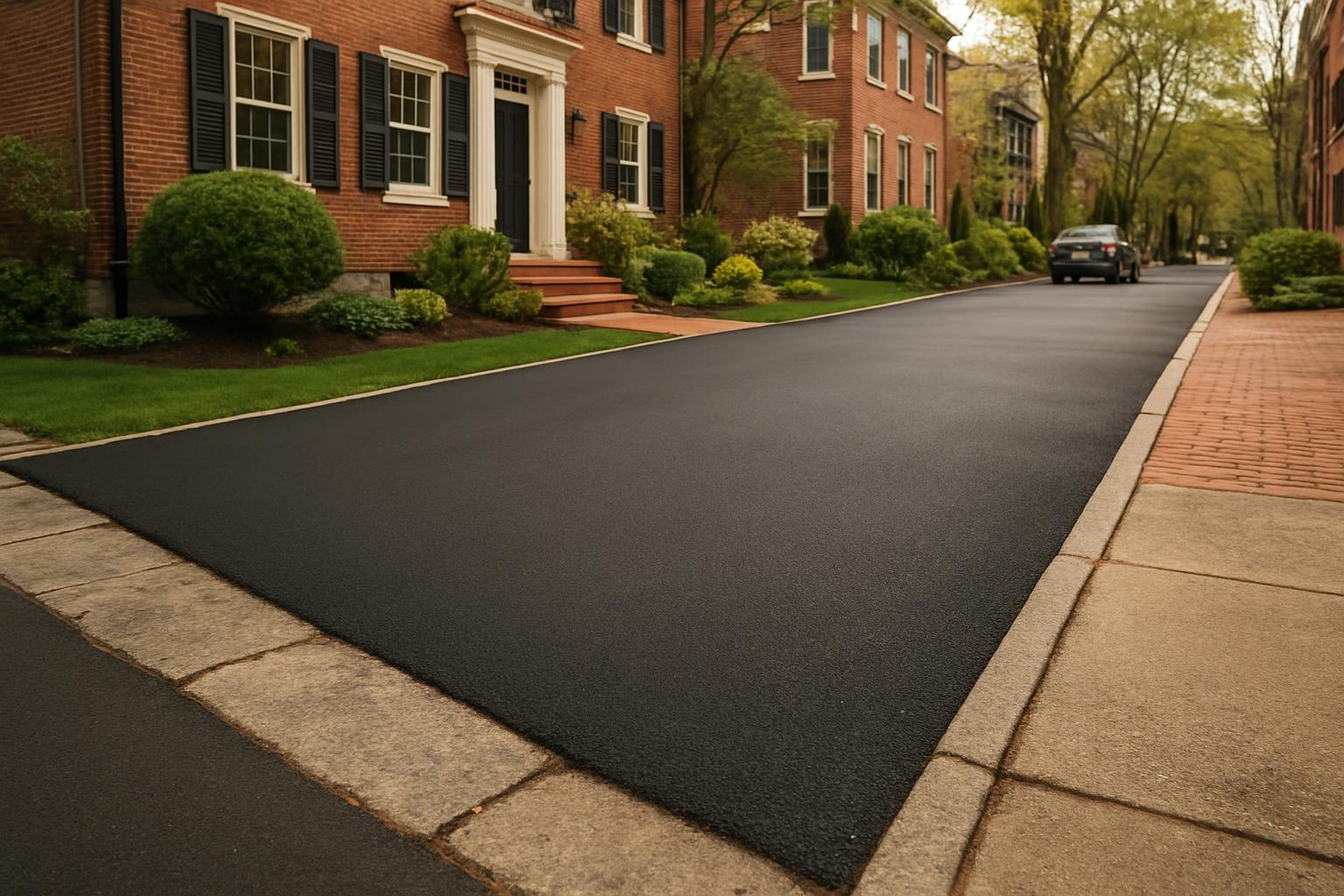
When you live or work in Boston, MA, your asphalt takes a beating. Freeze-thaw cycles, road salt, heavy traffic, and tight urban lots all put extra stress on driveways, parking lots, and private roads. At Precision Asphalt Boston, we specialize in asphalt paving that is designed specifically for our city’s unique conditions, so your pavement lasts longer and looks better.
Understanding how local climate impacts asphalt is the first step to getting a better result. Boston winters cause water to seep into tiny cracks, freeze, and expand. That repeated movement breaks down weak or poorly compacted asphalt. In summer, heat softens low-quality mixes and heavy vehicles can rut or deform the surface. The right mix design, correct thickness, and professional compaction are critical if you want your pavement to stand up to years of New England weather.
A quality asphalt paving project in Boston always starts with the base. Whether we are installing a new asphalt driveway in a residential neighborhood or a commercial parking lot in a busier district, we begin by evaluating the soil and existing materials. Soft, organic, or unstable soils must be removed or stabilized. Then we install a compacted gravel base to the proper depth. Skimping on this step is one of the most common reasons driveways and lots fail early, especially in older parts of the city where drainage is inconsistent.
Drainage is another major factor that determines how long your pavement will last. Standing water is the enemy of asphalt, particularly when it refreezes in winter. When we plan asphalt paving projects in Boston, we set slopes so water runs away from buildings and doesn’t pool in wheel paths or at the bottom of driveways. Sometimes that means adding simple solutions like swales, small catch basins, or regrading surrounding areas so water has somewhere to go.
For residential properties, a properly designed asphalt driveway offers a smooth, clean entrance that adds curb appeal and functionality. Homeowners often ask how thick their new asphalt driveway should be. In most Boston neighborhoods, we recommend at least a few inches of hot-mix asphalt over a well-compacted stone base, with adjustments based on vehicle loads and site conditions. Heavier SUVs, delivery trucks, and occasional moving vans may require additional thickness or a stronger base to prevent premature cracking and rutting.
Business and property owners in Boston have additional considerations. A parking lot must balance durability, safety, and traffic flow. That means planning for heavy delivery trucks, snow plow routes, and clear pavement markings. Installing high-quality asphalt paving and then adding proper striping for parking stalls, accessible spaces, fire lanes, and crosswalks gives a professional impression and helps you comply with local regulations.
No matter the type of property, choosing the right contractor is one of the most important decisions you will make. Look for an asphalt paving company that has a strong track record in Boston, understands local permitting requirements, and can explain the scope of work in clear terms. A trustworthy contractor will describe how deep they will excavate, what base materials they will use, the thickness of the asphalt layers, and how they will handle transitions to sidewalks, streets, or existing pavement.
Long-lasting pavement also depends on good timing and conditions. Asphalt paving should be scheduled when temperatures allow proper compaction and cooling. In Boston, this typically means planning major paving projects from late spring into early fall. However, smaller repairs and maintenance work can often be done earlier or later in the season as long as weather conditions cooperate.
Once your new asphalt surface is installed, maintenance becomes the key to protecting your investment. Simple steps like keeping the pavement clean, addressing small cracks early, and avoiding sharp turns or heavy loads on fresh asphalt can significantly extend its life. Many Boston property owners schedule periodic sealcoating and crack filling to slow oxidation, limit water penetration, and keep surfaces looking uniform.
Because Boston experiences frequent snow and ice, it is also important to think about winter care. Use plows and shovels with properly adjusted blades to avoid gouging the surface, and be cautious with chains or metal edges. De-icing products should be used sensibly, and any damage that appears over the winter should be inspected and repaired before the next freeze-thaw cycle causes it to spread.
If you are considering a new driveway or planning improvements to a parking area, start with a clear goal and a realistic budget. Decide whether you only need surface repairs or a full replacement. In some cases, asphalt resurfacing or overlays can provide a like-new appearance and performance without the cost of total reconstruction. In other situations, particularly where there are drainage issues or extensive base failure, full-depth replacement is the wiser long-term choice.
Precision Asphalt Boston focuses on matching the solution to the property. For homeowners, that might mean a smooth, well-graded driveway with neat edges that complements landscaping and makes winter snow removal easier. For commercial properties, it often involves creating durable traffic lanes, reinforced loading areas, and clear markings that keep vehicles and pedestrians safe.
When you work with an experienced local paving company, you get more than just new asphalt. You get guidance on design, drainage, materials, and maintenance that is specific to Boston’s streets, neighborhoods, and weather. That combination of local knowledge and solid workmanship is what ultimately gives you longer-lasting, better-looking pavement.
If you are ready to improve your property with professional asphalt paving tailored to Boston conditions, reach out to Precision Asphalt Boston to discuss your project, get a clear estimate, and plan a surface that will perform well for years to come.